A modern and safe combined heat and power plant in Kleszczów powered by RDF fuel – new energy for Kleszczów
An informational website about the planned energy investment in the industrial area of the Kleszczów municipality.
Investor statement
Dear Residents of the Kleszczów Municipality, Dear Representatives of the Local Government,
As the investor planning the development of a state-of-the-art small-scale combined heat and power (CHP) plant powered by alternative RDF fuel, Portonovo would like to present its position regarding the draft of the local spatial development plan currently under review, as well as highlight the environmental and economic significance of the planned project for the municipality.
The proposed facility aligns with the principles of sustainable waste management and energy transition. It will utilize RDF (Refuse-Derived Fuel – processed waste used as an alternative energy source). The technology employed excludes the storage or sorting of municipal waste on-site. The tightly sealed RDF containers will be used directly for energy production. Due to the project’s scale, we do not anticipate a significant increase in delivery traffic – our simulations indicate approximately 3–4 vehicles per hour, which should not pose a nuisance to residents, particularly as the facility will be located away from residential areas.
The installation will not process hazardous waste and is designed as a facility meeting the highest environmental standards. The planned generator output – up to 19 MW – would be sufficient to supply electricity to as many as 45,000 households. This is particularly relevant in the Kleszczów Municipality, which currently lacks a central heating or CHP plant, with residents and businesses relying on dispersed, often less efficient and more polluting energy sources. As such, the investment can significantly contribute to enhancing the municipality’s future energy independence.
We assure you that the installation will be designed and built in full compliance with the strictest EU standards, including Best Available Techniques (BAT) conclusions under Directive 2010/75/EU of the European Parliament and the Council. These standards are considerably more stringent than current national regulations. With the implementation of advanced flue gas treatment systems and continuous emissions monitoring, the facility’s environmental impact will be minimal. The modern technology employed will also eliminate unpleasant odors, and the investment will be entirely firesafe.
The proposed development is planned on the so-called 5P area, which is currently designated for industrial use under the 2017 local spatial development plan. We are deeply concerned about the proposed amendments, which would, in practice, prohibit the location of the modern installation described above – almost exclusively on the site of our planned investment. Such provisions pose a significant regulatory risk, undermine the stability of the investment process, and violate the principle of equal treatment of business entities. Meanwhile, other areas covered by the new spatial development plan (such as 14P and 16P) still permit the expansion of waste processing plants operated by Polymer Energy and Maya Victoria, despite these facilities using technologies significantly less advanced in terms of environmental standards than the one we propose.
It is worth emphasizing that Waste-to-Energy (WtE) facilities – or Thermal Waste Treatment Installations (ITPOs) – are widely implemented across Europe, with over 500 such facilities in operation, and are a key component in achieving EU targets to reduce municipal waste landfilling. Unlike traditional WtE plants, however, our facility will not process municipal waste into RDF, but instead will produce electricity from pre-contracted, ready-to-use alternative fuel.
The planned investment will also bring tangible social and economic benefits, including the creation of 50 to 90 new jobs and significant tax revenues for the municipality. With an estimated budget of approximately PLN 600 million (net), the Portonovo project is expected to generate several million PLN annually in property tax revenues for the municipal budget.
We believe that the evaluation of this investment should be based on factual and accurate information. This is a modern solution that bears no resemblance to outdated incineration plants from the 1990s. We appeal for this distinction to be recognized and for the project not to be associated with so-called “old waste incinerators” when shaping the provisions of the new spatial development plan. We respectfully request the opportunity to carry out the investment on the 5P site under the current building height regulations. We are convinced that a modern RDF-based energy facility can become a safe, low-emission, and environmentally responsible component of Kleszczów’s development.
We remain fully open to dialogue and cooperation with residents and local authorities, and we are happy to answer any questions regarding this project.
Respectfully,
About the Investor
Portonovo
a Polish company affiliated with the Merchant Place group
20+ years
of experience
2 mld £
projects worth approx. £2 billion
Collaboration
with local governments and public institutions
Completed projects for Hitachi Rail and Siemens.
Portonovo is a company registered in Poland and affiliated with the international group Merchant Place, which has many years of experience in financing, developing, and managing real estate projects in the UK and other European countries.
Within the Merchant Place group, commercial real estate investments worth approximately £2 billion have been financed and completed, including both industrial and commercial projects delivered for renowned international companies. Key developments include, among others, the construction of a manufacturing facility of over 45,000 m² for Hitachi Rail and a factory project for Tronic (now Siemens), which was awarded the title of the best industrial project in the world.
A key distinguishing feature of the group is its advanced cooperation with local authorities and public institutions in the UK. Projects were carried out in partnership with city councils, on land owned by the Crown Estate, and in enterprise zones requiring close coordination with public administration. These experiences cover both joint investment ventures and long-term planning and implementation processes.
Portonovo, leveraging the expertise and standards of the Merchant Place group, focuses on executing projects based on transparent relationships, partnership cooperation, and long-term value.
More information about Merchant Place:
Merchant Place WbsiteWhat does the planned investment involve?
RDF Fuel
A combined heat and power plant powered by ready-made and certified alternative RDF fuel.
No Segregation
No waste segregation or storage at the facility.
Certified Source
Use of ready-made, certified fuel only. No municipal waste.
19 MW Capacity
Electricity production (up to 19 MW).
Heat for the Municipality
Installation with potential for heat supply in the future.
Frequently Asked Questions
Portonovo is a Polish company affiliated with the international group Merchant Place, which has over 20 years of experience in delivering large-scale industrial and commercial projects in the UK and Europe. The group has completed investments totaling around £2 billion, including for companies such as Hitachi Rail and Siemens. Portonovo operates based on the highest standards of partnership with local governments and public institutions, focusing on transparent and long-term projects with high added value for local communities.
More information is available in theAbout Us section and at merchantdevelopments.com
Waste-to-Energy plants (WTE or ITPO – Thermal Waste Processing Installations) are widely used across Europe – more than 500 such facilities are operational. However, unlike a typical WTE plant, our investment will not involve the processing of municipal waste into fuel, but will generate electricity from pre-contracted, ready-made alternative fuel (RDF – Refuse-Derived Fuel).
The installation planned in the industrial areas of Bogumiłów and Karolów will have nothing to do with facilities commonly referred to as „waste incinerators.” It will use RDF – processed waste that serves as an alternative energy source. The project entirely excludes any waste sorting on site. It will be an industrial facility dedicated to the thermal processing of ready fuel. In practice, it will function as a CHP plant, where instead of fossil fuels (e.g., lignite, coal), RDF is used – waste unsuitable for recycling. The gases produced during combustion will undergo a complex, multi-stage purification process, after which they can be safely emitted into the atmosphere.
The project will be carried out in accordance with the strictest EU standards, including Best Available Techniques (BAT) in line with Directive 2010/75/EU of the European Parliament and Council, which are stricter than domestic regulations. Thanks to this advanced filtration and control, the air released from the plant is clean and safe. Also, no unpleasant odor will be present – RDF is transported in sealed containers and immediately introduced into the process line.
The planned investment, due to its technology, will not pose a threat to residents or the environment. There will be no on-site storage or waste sorting. Strict regulations in this area and the best European practices we apply minimize risks, including fire hazards. Fire protection systems in facilities generating energy through high-temperature combustion are significantly stricter than those in companies dealing with waste processing. In summary, due to the technology and type of fuel used, the planned investment will not pose a fire risk.
Due to the scale of the investment, there is no question of a drastic increase in road traffic. The planned generator capacity – up to 19 MW – means it will be a much smaller facility compared to, for example, investments in Warsaw, where over 350 trucks make deliveries. Our planning and simulations show that traffic will increase by around 3 trucks per hour after the plant is operational – a level unlikely to be a nuisance for residents, especially considering the planned location is far from residential buildings.
The fuel to be used in the installation is RDF (Refuse-Derived Fuel – processed waste used as an alternative energy source). According to Portonovo’s project, there are no plans to process or sort waste on-site, nor to accept hazardous waste.
Combustion of RDF in similar installations produces, among others, slag and bottom ash. Modern technologies enable a highly effective reduction of such by-products. These are not hazardous waste – after appropriate treatment, sorting, and obtaining technical approval, they can be used in non-residential construction and road building, or for land reclamation.
Emission standards for the planned installation are extremely strict – much stricter than those for coal or biomass plants. As a result, such facilities are safe for both people and the environment. The composition of exhaust gases is constantly monitored, and data is accessible not only to plant employees but also to authorized institutions.
Dioxins and furans are indeed dangerous, but they are quite unstable compounds – they break down at around 700°C. The planned installation will operate at much higher temperatures, sufficient not only to decompose dioxins and furans but also benzene and hexachlorobenzene (which degrade at 900–950°C). Additionally, such installations now use filtration with activated carbon or tungsten-vanadium catalysts – effectively eliminating this threat.
Many experts, including Prof. Grzegorz Wielgosiński, believe that fears of dioxins and furans stem from 1990s information, when outdated technologies were used.
The project involves electricity generation via a 19 MW steam turbine generator – sufficient to power a small town. In the future, this may contribute to greater energy security for the Kleszczów municipality. Technologically, nothing prevents the facility from supplying heat to homes, apartments, and public buildings in the municipality – for example, Solpark, which had previously planned to use geothermal wells.
Currently, there is no central heating or CHP plant in the municipality, and residents and private companies rely on their own often inefficient energy sources. The investment could significantly improve this situation.
The facility would employ 50–90 people, creating local jobs.
Its operation would also result in substantial tax revenues for the municipality – including property tax, PIT, and CIT. The estimated budget of the Portonovo investment is approximately PLN 600 million net, potentially generating several million PLN annually in property tax alone.
What does the Kleszczów municipality gain?
jobs
annually from taxes
potential supplies
improved energy security
industrial site*
Location of the investment site
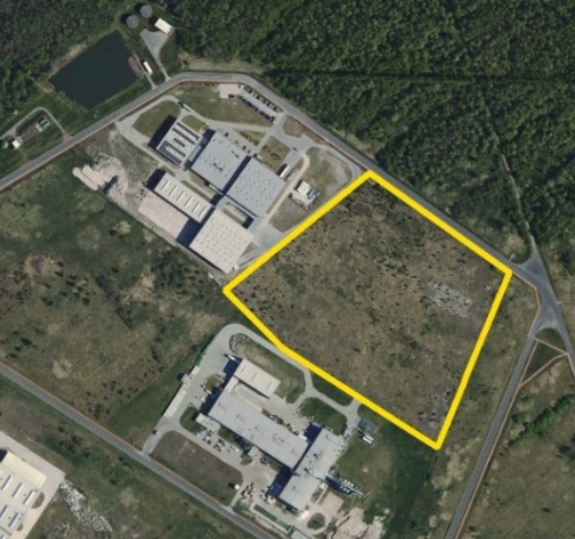
The yellow line marks the boundaries of the property belonging to PORTONOVO.
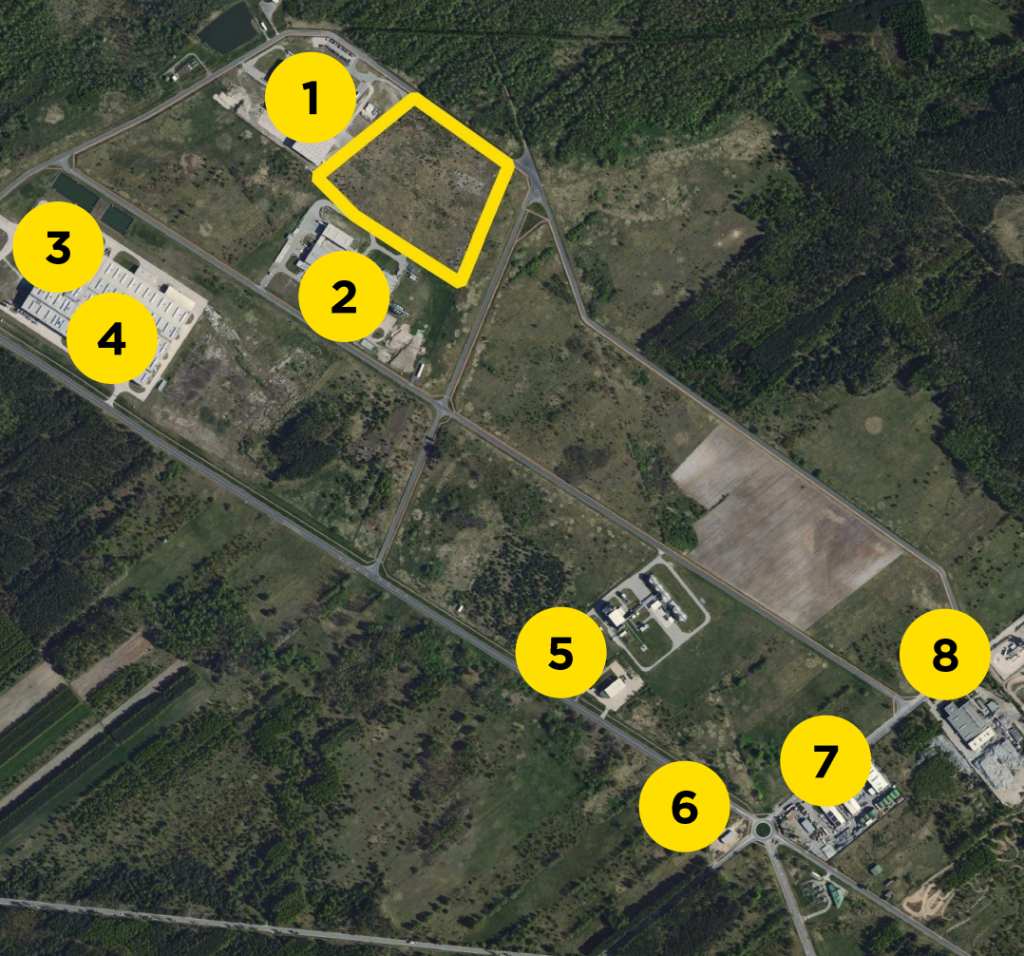
The area of the planned investment is marked in yellow.
Nearby developments:
Safety and Environmental Standards
Project Visualization
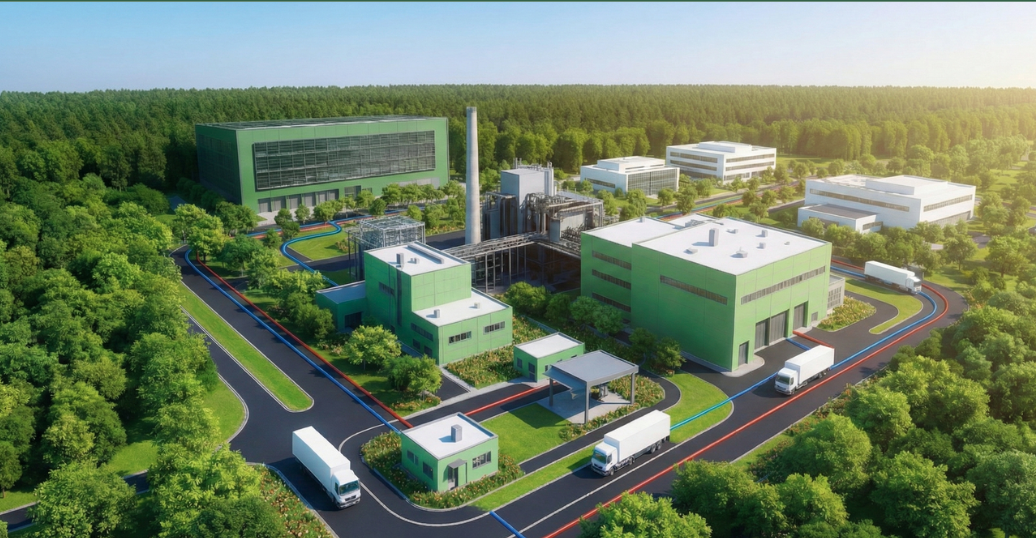
The visualization is for illustrative purposes and may change during the design process.
Contact and dialogue
We are open to questions and dialogue. We encourage you to explore the materials and get in touch.